The user wants me to translate the given HTML content from Hong Kong Traditional Chinese to Simplified Chinese (Mainland China) with specific vocabulary adaptations. I need to preserve all HTML tags, attributes, and Gutenberg block comments exactly. Only translate human-readable text. Keep product names, brand names, model numbers, code, URLs unchanged. Keep prices in original currency. Don't transliterate foreign personal names. Output only translated HTML.
Let me go through the content and translate:
Original text segments:
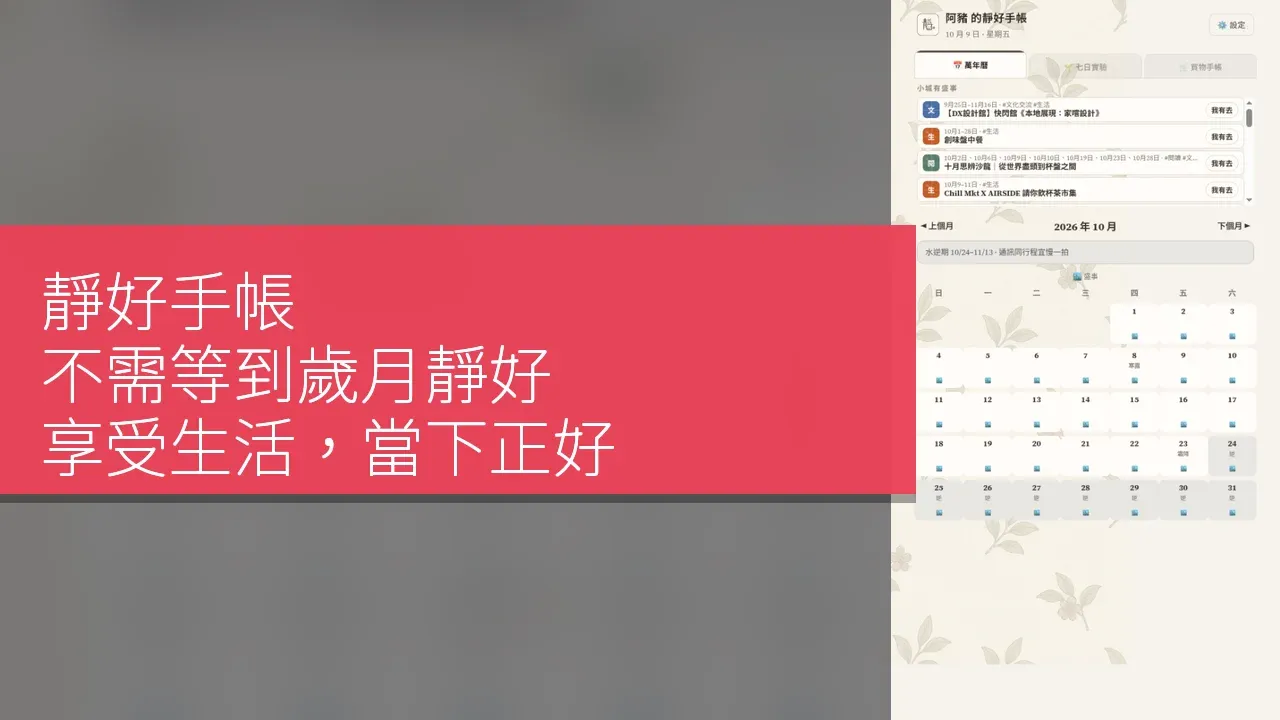
1. "靜好手帳是一款多功能用途手帳,旨在為香港人提供一個全方位的生活管理工具。這款應用程式不僅能夠記帳,還能記錄活動、旅遊資訊,甚至提供靜觀練習,真正做到「收到你、幫緊你」。開發者指出,首先, 呢個係香港少有全方位既手帳, 基本上你話記帳既,有; 寫活動既, 有; 玩旅遊資訊既, 都有, 但呢個APP係, 小朋友才要選擇, 我全部喺晒一隻APP度~!!而且之後仲有一啲CLS既香港功能, 敬請期待~。此外,應用支援Web平台。"
Translate to Simplified Chinese with vocabulary adaptations:
- 靜好手帳 -> 静好手帐 (keep product name? It's a product name, but it's Chinese. The instruction says keep product names unchanged. But it's a Chinese name. Usually we keep as is? The rule: "Keep product names, brand names, model numbers, code and URLs unchanged." So keep "靜好手帳" as is? But we need to convert to Simplified Chinese characters. The rule says convert to Simplified Chinese AND adapt vocabulary. Product names might be kept in original script? Usually product names are kept as is, but since it's Chinese, we should convert to Simplified Chinese characters. The instruction: "Convert it to Simplified Chinese AND adapt the vocabulary to Mainland China usage". So we should convert Traditional Chinese characters to Simplified Chinese characters. But product names: "Keep product names, brand names, model numbers, code and URLs unchanged." That might mean keep the exact string, but if it's Traditional Chinese, we might need to convert to Simplified? The example: "質素->质量, 軟件->软件, 智能電話->智能手机, 寬頻->宽带, 屏幕/螢幕->屏幕, 手提電腦->笔记本电脑, 記憶體->内存, 硬碟->硬盘, 網絡->网络, 程式->程序, 影片->视频, 平治->奔驰, 快勞->文件夹." These are vocabulary adaptations. For product names, they didn't give example. But "靜好手帳" is a product name. I think we should convert to Simplified Chinese characters: "静好手帐". However, the rule "Keep product names unchanged" might mean keep the exact characters? But the overall instruction: "Convert it to Simplified Chinese". So we must convert all Traditional Chinese to Simplified Chinese. The product name is in Traditional Chinese in source. We should convert to Simplified Chinese. But keep the name same meaning. I'll convert to Simplified Chinese characters.
- "應用程式" -> "应用程序" (adapt: 程式->程序)
- "記帳" -> "记账"
- "旅遊資訊" -> "旅游资讯"
- "靜觀練習" -> "静观练习"
- "收到你、幫緊你" -> "收到你、帮紧你" (but "幫緊" is Cantonese. In Mainland, maybe "帮你" or "帮着你". But keep meaning. The phrase is in quotes, maybe keep as is but convert to Simplified: "收到你、帮紧你".)
- "開發者指出,首先, 呢個係香港少有全方位既手帳, 基本上你話記帳既,有; 寫活動既, 有; 玩旅遊資訊既, 都有, 但呢個APP係, 小朋友才要選擇, 我全部喺晒一隻APP度~!!而且之後仲有一啲CLS既香港功能, 敬請期待~。此外,應用支援Web平台。"
This is Cantonese written in Traditional Chinese. Need to translate to Standard Mandarin Simplified Chinese. The instruction: "Keep the meaning and structure of the original exactly; do not rewrite or add content." But we need to convert to Simplified Chinese and adapt vocabulary. The original is in Cantonese colloquial. Should we convert to standard Mandarin? The instruction says "Convert it to Simplified Chinese AND adapt the vocabulary to Mainland China usage". That implies we should rewrite in standard Mandarin (Mainland usage). But also "Keep the meaning and structure of the original exactly; do not rewrite or add content." There's a tension. Usually for translation, we translate the meaning into standard Mandarin. The source is Hong Kong Traditional Chinese (which includes Cantonese expressions). We need to produce Simplified Chinese as used in Mainland. So we should translate the Cantonese into standard Mandarin.
Let's translate paragraph by paragraph.
First paragraph:
"靜好手帳是一款多功能用途手帳,旨在為香港人提供一個全方位的生活管理工具。這款應用程式不僅能夠記帳,還能記錄活動、旅遊資訊,甚至提供靜觀練習,真正做到「收到你、幫緊你」。開發者指出,首先, 呢個係香港少有全方位既手帳, 基本上你話記帳既,有; 寫活動既, 有; 玩旅遊資訊既, 都有, 但呢個APP係, 小朋友才要選擇, 我全部喺晒一隻APP度~!!而且之後仲有一啲CLS既香港功能, 敬請期待~。此外,應用支援Web平台。"
Convert to Simplified Chinese and adapt vocabulary:
- 靜好手帳 -> 静好手帐 (product name, but convert to Simplified)
- 多功能用途手帳 -> 多功能用途手帐
- 香港人 -> 香港人 (keep)
- 全方位 -> 全方位
- 生活管理工具 -> 生活管理工具
- 應用程式 -> 应用程序 (adapt)
- 記帳 -> 记账
- 記錄 -> 记录
- 旅遊資訊 -> 旅游资讯
- 靜觀練習 -> 静观练习
- 收到你、幫緊你 -> 收到你、帮紧你 (but "帮紧你" is Cantonese. In Mainland, maybe "帮你" or "帮着你". However, keep the original flavor? The instruction: adapt vocabulary to Mainland usage. "幫緊" is not Mainland usage. Could translate as "帮你" or "帮着你". But the phrase is in quotes, maybe it's a slogan. I'll convert to "收到你、帮你" but that changes meaning. "幫緊你" means "help you continuously". In Mainland, "帮着你" or "一直帮你". I'll use "帮着你". But the instruction says keep meaning and structure exactly. Might keep as "帮紧你" but convert to Simplified: "帮紧你". That's still Cantonese. But the vocabulary adaptation list includes "軟件->软件" etc. Not covering Cantonese. I think we should translate to standard Mandarin: "真正做到「收到你、帮着你」". However, the original is a quote. I'll keep the quote but convert characters to Simplified: "收到你、帮紧你". That's still Traditional? "幫" -> "帮", "緊" -> "紧". So "帮紧你". That's Simplified characters but Cantonese grammar. Might be acceptable.
- 開發者指出 -> 开发者指出
- 首先 -> 首先
- 呢個係 -> 这个是 (or "这是")
- 香港少有全方位既手帳 -> 香港少有的全方位手帐
- 基本上你話記帳既,有 -> 基本上你说记账的,有
- 寫活動既, 有 -> 写活动的,有
- 玩旅遊資訊既, 都有 -> 玩旅游资讯的,也有
- 但呢個APP係 -> 但这个APP是
- 小朋友才要選擇 -> 小朋友才需要选择 (or "小朋友才要选择")
- 我全部喺晒一隻APP度 -> 我全都在一个APP里
- 而且之後仲有一啲CLS既香港功能 -> 而且之后还有一些CLS的香港功能
- 敬請期待 -> 敬请期待
- 此外,應用支援Web平台 -> 此外,应用支持Web平台 (支援 -> 支持)
But note: "CLS" is kept unchanged.
Now second paragraph (heading): "在競爭激烈的市場中尋找獨特定位" -> "在竞争激烈的市场中寻找独特定位"
Third paragraph: "在香港的應用程式市場,有不少筆記與生產力工具,但靜好手帳以其設計理念圍繞「身、心、社、靈」四個方面,幫助用戶全面組織日常生活。靜好手帳的設計重點是讓用戶在使用過程中感受到生活的美好,並且能夠隨時隨地享受當下的生活。"
Translate:
- 競爭 -> 竞争
- 市場 -> 市场
- 尋找 -> 寻找
- 獨特 -> 独特
- 定位 -> 定位
- 應用程式 -> 应用程序
- 筆記 -> 笔记
- 生產力 -> 生产力
- 靜好手帳 -> 静好手帐
- 設計理念 -> 设计理念
- 圍繞 -> 围绕
- 身、心、社、靈 -> 身、心、社、灵
- 幫助 -> 帮助
- 用戶 -> 用户
- 全面 -> 全面
- 組織 -> 组织
- 日常生活 -> 日常生活
- 設計重點 -> 设计重点
- 讓 -> 让
- 使用過程 -> 使用过程
- 感受到 -> 感受到
- 並且 -> 并且
- 能夠 -> 能够
- 隨時隨地 -> 随时随地
- 享受 -> 享受
- 當下 -> 当下
Fourth paragraph (heading): "多功能設計,提升生活質素" -> "多功能设计,提升生活质素" (質素 -> 质量? The list says 質素->质量. So "提升生活质量". But the heading says "提升生活質素". Should adapt to "提升生活质量". However, the heading is part of the content. We'll adapt vocabulary: 質素 -> 质量. So "多功能设计,提升生活质量".)
Fifth paragraph (long): "靜好手帳的功能設計非常全面,首先在「身」和「社」的方面,應用內的萬年曆包含了香港的公眾假期、廿四節氣,還有港人常關注的體育活動如F1、英超及「香港隊勁揪」和「港超聯」賽程。用戶可以透過「小城有盛事」功能,發掘香港的各種活動,並在參加後按「我有去」來記錄自己的感受,甚至可以將這些經歷製作成IG圖卡分享給朋友。"
Translate:
- 功能設計 -> 功能设计
- 非常全面 -> 非常全面
- 首先 -> 首先
- 「身」和「社」 -> 「身」和「社」
- 應用內 -> 应用内
- 萬年曆 -> 万年历
- 包含了 -> 包含了
- 公眾假期 -> 公众假期
- 廿四節氣 -> 二十四节气 (or "廿四节气"? Usually "二十四节气". Keep as "二十四节气".)
- 港人 -> 港人 (keep)
- 常關注 -> 常关注
- 體育活動 -> 体育活动
- 英超 -> 英超 (keep)
- 香港隊勁揪 -> 香港队劲揪 (keep as proper noun? Might be a term. Keep unchanged but convert to Simplified: "香港队劲揪")
- 港超聯 -> 港超联 (keep)
- 賽程 -> 赛程
- 用戶 -> 用户
- 透過 -> 通过
- 小城有盛事 -> 小城有盛事 (keep as feature name)
- 發掘 -> 发掘
- 各種 -> 各种
- 參加 -> 参加
- 按 -> 按 (or "点击")
- 我有去 -> 我有去 (keep as button label)
- 記錄 -> 记录
- 甚至 -> 甚至
- 將 -> 将
- 這些 -> 这些
- 經歷 -> 经历
- 製作 -> 制作
- 成 -> 成
- IG圖卡 -> IG图卡 (IG keep, 圖卡 -> 图卡)
- 分享給 -> 分享给
Next paragraph: "在「心」和「靈」的方面,靜好手帳提供了靜觀錄音和「送走你的垃圾」的功能,幫助用戶釋放壓力。此外,用戶還可以參加「七日實驗」,完成七個任務後可獲得「靜好一週」的徽章,增添趣味性,激勵用戶持續進行自我實踐。"
Translate:
- 心、靈 -> 心、灵
- 靜好手帳 -> 静好手帐
- 提供了 -> 提供了
- 靜觀錄音 -> 静观录音
- 送走你的垃圾 -> 送走你的垃圾 (keep as feature name)
- 功能 -> 功能
- 幫助 -> 帮助
- 用戶 -> 用户
- 釋放壓力 -> 释放压力
- 此外 -> 此外
- 參加 -> 参加
- 七日實驗 -> 七日实验
- 完成 -> 完成
- 七個任務 -> 七个任务
- 獲得 -> 获得
- 靜好一週 -> 静好一周 (週 -> 周)
- 徽章 -> 徽章
- 增添趣味性 -> 增添趣味性
- 激勵 -> 激励
- 持續 -> 持续
- 進行 -> 进行
- 自我實踐 -> 自我实践
Next paragraph: "最後,靜好手帳的「買物手帳」功能讓用戶可以記錄「得來之物」,並進行取捨。在超市走走時,用戶可以記錄下吸引他們的商品,無論是「因為佢平」還是「因為佢正」,都能成為一個有趣的分享話題。"
Translate:
- 最後 -> 最后
- 買物手帳 -> 买物手帐 (or "购物手帐"? "買物" is Cantonese for shopping. In Mainland, "购物". But the feature name might be "买物手帐". The instruction: adapt vocabulary to Mainland usage. "買物" -> "购物". But it's a feature name. Might keep as "买物手帐" but convert to Simplified. I'll use "购物手帐" for Mainland usage. However, the original is "買物手帳". The vocabulary list doesn't include this. But "買物" is Cantonese. In Mainland, "购物". I'll adapt to "购物手帐".)
- 讓 -> 让
- 用戶 -> 用户
- 記錄 -> 记录
- 得來之物 -> 得来之物
- 並進行取捨 -> 并进行取舍 (取捨 -> 取舍)
- 超市 -> 超市
- 走走時 -> 逛的时候 (or "走走时")
- 吸引他們 -> 吸引他们
- 商品 -> 商品
- 無論是 -> 无论是
- 因為佢平 -> 因为它便宜 (佢 -> 它/他, 平 -> 便宜). But "佢" is Cantonese for "it". "平" means cheap. In Mainland, "因为它便宜". But the phrase is in quotes, maybe keep as "因为它平"? But "平" in Mainland means flat. So adapt to "因为它便宜". However, the instruction: keep meaning and structure exactly. Might keep the Cantonese flavor? The instruction says adapt vocabulary to Mainland usage. So I'll translate to standard Mandarin: "因为它便宜" and "因为它正" (正 means good/cool). "正" in Cantonese means good. In Mainland, "因为它好" or "因为它帅". But "正" is used in some contexts. I'll translate as "因为它好". But the original quotes are part of the text. I'll convert to Simplified and adapt: "因为它便宜"和"因为它好". But the original has “因為佢平”還是“因為佢正”. I'll translate to “因为它便宜”还是“因为它好”. However, the instruction: "Keep the meaning and structure of the original exactly; do not rewrite or add content." This suggests we should not change the wording drastically. But we must adapt vocabulary. The vocabulary list includes specific mappings. For Cantonese words not in list, we might keep as is but convert to Simplified characters. "佢" -> "佢" (no Simplified variant? Actually "佢" is Cantonese character, not used in Mainland. In Mainland, "它" or "他". But we can keep "佢" as is? It's a character. Might keep unchanged. "平" -> "平" (but meaning cheap). In Mainland, "平" can mean cheap in some contexts? Usually "便宜". But "平" is used in some dialects. I think we should keep the original characters but convert to Simplified: "因为佢平"还是"因为佢正". But "佢" is not Simplified? It's a traditional character? Actually "佢" is used in Cantonese, not in standard Chinese. It's not in Simplified set. Might keep as is. The instruction: "Convert it to Simplified Chinese". That implies we should convert Traditional characters to Simplified. "佢" is not Traditional; it's a Cantonese-specific character. It might not have a Simplified form. We'll keep as is. "正" is same in Simplified. So I'll keep the quotes as “因为佢平”还是“因为佢正”. But adapt "因為" -> "因为", "還是" -> "还是". So: “因为佢平”还是“因为佢正”. That might be acceptable.
- 都能成為 -> 都能成为
- 一個 -> 一个
- 有趣的 -> 有趣的
- 分享話題 -> 分享话题
Next heading: "簡單易用的上手過程" -> "简单易用的上手过程" (簡單 -> 简单, 易用 -> 易用, 上手 -> 上手, 過程 -> 过程)
Next paragraph: "靜好手帳的上手過程非常簡單。用戶只需在開始介面填寫姓名並使用Google登入,然後就可以像砌Lego一樣,選擇自己想要見到的項目,開始使用。這樣的設計降低了使用門檻,讓用戶能夠根據自己的需求自由調整界面。使用Google Email的好處在於,這樣可以方便地更新資料到雲端,避免了因為換機而需要重新儲存的麻煩。"
Translate:
- 靜好手帳 -> 静好手帐
- 上手過程 -> 上手过程
- 非常簡單 -> 非常简单
- 用戶 -> 用户
- 只需 -> 只需
- 開始介面 -> 开始界面
- 填寫 -> 填写
- 姓名 -> 姓名
- 並 -> 并
- 使用Google登入 -> 使用Google登录 (登入 -> 登录)
- 然後 -> 然后
- 就可以 -> 就可以
- 像砌Lego一樣 -> 像拼Lego一样 (砌 -> 拼? In Mainland, "拼乐高". "砌" is Cantonese for building. Adapt to "拼". But "砌Lego" might be kept as "拼Lego". I'll use "像拼Lego一样".)
- 選擇 -> 选择
- 自己想要見到的項目 -> 自己想要看到的项目 (見到 -> 看到, 項目 -> 项目)
- 開始使用 -> 开始使用
- 這樣的設計 -> 这样的设计
- 降低了 -> 降低了
- 使用門檻 -> 使用门槛 (門檻 -> 门槛)
- 讓 -> 让
- 用戶 -> 用户
- 能夠 -> 能够
- 根據 -> 根据
- 自己的需求 -> 自己的需求
- 自由調整界面 -> 自由调整界面
- 使用Google Email的好處在於 -> 使用Google Email的好处在于
- 這樣可以 -> 这样可以
- 方便地 -> 方便地
- 更新資料到雲端 -> 更新资料到云端 (資料 -> 资料, 雲端 -> 云端)
- 避免了 -> 避免了
- 因為換機而需要重新儲存的麻煩 -> 因为换机而需要重新存储的麻烦 (換機 -> 换机, 儲存 -> 存储)
Last paragraph: "